
Culto del miércoles, 11 de marzo de 2026
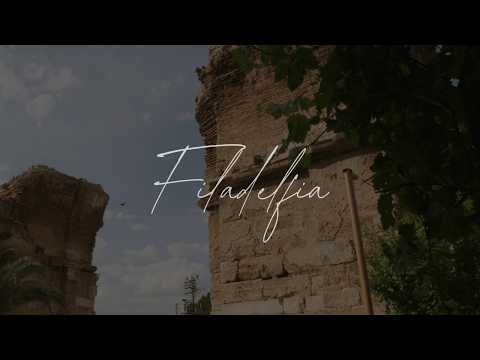
El mensaje empieza en el minuto 1:21:41.
Ver en YouTubeEstudio completo en español
Introducción
Tercera entrega de la serie sobre las siete iglesias del Apocalipsis. "Tienes poca fuerza, y has guardado mi palabra, y no has negado mi nombre." Filadelfia era pequeña, con pocos recursos y sin ninguna influencia política, y es —junto con Esmirna— una de las dos únicas iglesias que no reciben reprensión. El estudio va a Isaías 22:22 para explicar la llave de David, desmenuza el nombre de la ciudad (amor de hermanos), lee la promesa de ser columna en el templo a la luz de los terremotos que sacudían aquella ciudad, y termina en el dato histórico: Filadelfia permaneció cristiana hasta cerca del año 1390, más que ninguna otra de las siete.
I.El que tenga oído, que oiga
A. Se puede tener oído y no oír. Nos encanta oír lo que nos place, y cada cual registra en su cerebro lo que quiere oír.
B. Los largos años de conocer el Evangelio no han menguado el amor a la palabra: es lo más grande que puede suceder en la tierra.
C. Muchas veces el ser humano tiene más leyes que un abogado: desde el más chiquito hasta el más grande, no sabes con qué intención te hablan.
D. Al envejecer uno entiende que hay cosas que no valen la pena, y deja el oído para lo que sí.
E. Todas estas iglesias están registradas en el Apocalipsis para hacernos entender cuál es el pensamiento de Dios. El pensamiento de Dios es alto; el nuestro está a flor de piel.
F. Estaban todas alrededor de lo que hoy es Turquía, y allí fueron los apóstoles a enseñar. Nosotros leemos lo poquito que se dice y pensamos que murieron pronto: tuvieron muchos años trabajando la obra.
II.Ver la realidad, y orar por los que gobiernan
A. Lo que quiere despertar en la iglesia es que veamos nuestra realidad: dejar las fantasías y vivir como adultos.
B. Se dice que debemos honrar a nuestros gobernantes, porque eso hace que el corazón sea capaz de orar por los que dirigen nuestras vidas.
C. Y lo dice sin llevar a la iglesia a la política: "si fuera cuestión de opinar, te habría traído una papeleta; pero como soy absoluta en lo que enseño, tú no vas a hacer ninguna cruz".
D. Como iglesia tenemos que tener respeto a los demás y no hablar despectivamente de nadie, sea quien sea: hay que ser personas de altura.
E. Lo que tú dices por tu boca influye mucho en el que te prestó el oído.
F. Israel es pequeño, y es la nación que conoce lo que es una guerra, porque lleva guerreando toda la vida. Pero ¿dónde nació Jesús? Esa es la nación de Dios.
G. Si tú y yo no entendemos la historia de ese pueblo, estamos lejos y ausentes. Debemos dejar de ser niños, aprender a amarnos y orar por nuestros líderes, sople el viento que sople.
H. Si hoy tuviéramos que escribir la historia de nuestra vida como iglesia, ¿qué escribiríamos? ¿Que amamos, luchamos, oramos y aprendimos? ¿O que fuimos un lujo y unas caras más?
III.La llave de David (Isaías 22:22)
A. La llave de David es una de las frases proféticas más profundas del libro. Para entenderla hay que ir al Antiguo Testamento.
B. La expresión viene de Isaías 22:22, y en Filadelfia se menciona por segunda vez.
C. La llave representa autoridad. La puerta representa acceso al reino. David representa el linaje del Mesías.
D. "Pondré la llave de la casa de David sobre su hombro; abrirá y nadie cerrará, cerrará y nadie abrirá."
E. Cuando Cristo usa esta expresión está declarando que Él es el verdadero rey del linaje de David. David era rey, pero el verdadero Rey era el Cristo.
F. Jesús tiene autoridad absoluta sobre el reino de Dios, sobre la salvación y sobre el acceso al reino; y está a la diestra del Padre para interceder.
G. Por eso toda oración termina al Padre en el nombre de Jesús: no es por ti ni por mí, es en su nombre.
H. De David viene el linaje del Señor; y en ese linaje hay una mujer pagana, cuando se suponía que no se casaran fuera de los suyos. De esa descendencia vienen el tiempo de la ley y el tiempo de la gracia.
IV.El nombre y la ciudad
A. "Filadelfia" significa amor de hermanos.
B. ¿Y eso se ve? No le lavas los pies a nadie; si alguien cae en un hospital, estás medio día y ya buscas quién te sustituya.
C. Esto no es ir a la casa de otro a averiguarle la vida: esto es entrega, es pasión, es hacer milagros. El pueblo de Dios tiene que tener milagros porque tiene amor.
D. Jesús no dejó de ver que la multitud tenía hambre. Él puede multiplicar; pero tú puedes sacar de lo tuyo y darle al que tiene hambre.
E. Porque dar es doler: cuando tú aprendes a amar, duele.
F. Y la ciudad sufría terremotos con frecuencia; ese dato vuelve después, en la promesa.
V.Cómo se presenta Jesús
A. "El Santo, el Verdadero, el que tiene la llave de David."
B. Tú le sirves al Santo, tres veces santo. Esto no es cuestión de religión: es que le sirves al que es santo.
C. Y el que tiene la llave tiene autoridad para abrir y para cerrar puertas espirituales. Por eso todo se ora en el nombre de Jesús.
VI.El mensaje a Filadelfia
A. "Tienes poca fuerza, pero has guardado mi palabra y no has negado mi nombre."
B. Lo más seguro es que era una iglesia pequeña, con pocos recursos y sin ninguna influencia política —cosa que hoy muchas iglesias sí tienen—. Pero era muy fiel a Cristo.
C. La puerta abierta: en el Nuevo Testamento significa oportunidad para predicar, expansión, llevar el Evangelio, amar y hacer obras misioneras. Y nadie puede cerrar la puerta que Cristo abre.
D. ¿A cuántas personas has tenido tiempo de predicarles? Y es predicar y enseñar, no contender.
E. ¿Por qué las madres no les predican a sus hijos? ¿Qué es la predicación, sino una enseñanza? Hay que hablar, hay que enseñar, hay que orar, hay que conocer los versículos.
F. Porque lo más grande de todo esto es que hay ausencia de amor; y si usted no ama, su alma está en peligro.
G. La oposición: Jesús menciona grupos que perseguían a los cristianos, y aun así la iglesia permanecía fiel.
H. Hoy no son grupos: hoy persiguen los demonios, y se pasean porque no hay quien los reprenda en el nombre de Cristo.
I. Atrévete a hablar una verdad. Que se caiga el universo: el Dios que te llamó es el Dios que te va a respaldar.
J. Porque nuestra lucha no es contra sangre ni contra personas: es contra potestades y principados, y esos están debajo de nuestros pies.
VII.Las cuatro promesas
A. Protección: "yo te guardaré de la hora de la prueba". Porque cuando el Padre nos ve, no nos ve a nosotros: ve al Hijo.
B. Una corona: "retén lo que tienes, para que ninguno tome tu corona". Si no retienes lo que tienes, cualquiera te la quita.
C. Columna en el templo: "al que venciere, yo lo haré columna en el templo de mi Dios, y nunca más saldrá de allí".
D. En una ciudad de terremotos, donde los edificios caían, esa promesa era poderosísima: Dios ofrece estabilidad eterna y seguridad permanente.
E. Un nombre nuevo: el nombre de su Dios, el nombre de la nueva Jerusalén que desciende del cielo, y su nombre nuevo. Habla de pertenencia eterna a Dios.
F. El templo tiene sus propias columnas; pero un hombre y una mujer de Dios son columnas en el templo: son los que sostienen el día de la prueba y el día del problema.
VIII.Dos iglesias sin reprensión
A. De las siete, Esmirna y Filadelfia son las únicas que no reciben reprensión.
B. Esto enseña algo importante: las iglesias más fieles muchas veces son pequeñas, humildes, sin poder humano. Son personas que aman.
C. Hoy el más ligero que habla es el que gana la carrera, y la iglesia se vuelve la del que más empuja y más pretende. Pero un corazón manso es lo que agrada a Dios.
IX.Lo que pasó después
A. El cristianismo desapareció de varias regiones de Turquía. Pero Filadelfia fue diferente: permaneció cristiana por siglos.
B. Fue una de las últimas ciudades cristianas de Asia Menor; resistió invasiones y siguió siendo ciudad cristiana hasta cerca del siglo XIV, más que las otras.
C. Cuando el Imperio Bizantino perdía territorio, Filadelfia seguía resistiendo. Fue conquistada alrededor del año 1390, cuando el Imperio Otomano dominó la región.
D. Muchos ven aquí un símbolo: la iglesia fiel recibió una estabilidad espiritual duradera.
E. Y eso tenemos que ser: permanentes en fe, permanentes en amor, permanentes como guerreros. No hoy sí y mañana no, ni según las circunstancias.
F. ¿Y qué te da el mundo? Traición, mentira, engaño; te deforma la persona.
G. Hay que meterse en medio, entre Dios y los juicios que quiere mandar sobre la tierra; y faltan valientes que clamen y que digan la verdad, y guerreros que tomen la palabra de Dios, que es la mejor arma para derribar al diablo.
X.Aplicación
A. La fidelidad a Cristo no depende de riqueza, ni de tamaño, ni de poder: depende de obediencia y de perseverancia.
B. Que el Señor pueda decirnos lo mismo: has guardado mi palabra y no has negado mi nombre.
C. Honra y ora por los que gobiernan, y no hables despectivamente de nadie.
D. Practica el amor de hermanos de verdad: quédate con el enfermo, saca de lo tuyo para el que tiene hambre, aunque duela.
E. Aprovecha la puerta abierta: predica y enseña, empezando en tu propia casa, y no conviertas eso en contienda.
F. Al fiel, Dios está con el fiel: los días malos pasan sobre la cabeza, pero Él limpia las lágrimas, da luz cuando no sabemos qué hacer, y quita la carga poniendo su fuerza.
G. El guerrero tiene heridas, desánimo, angustia y dolor; pero el guerrero es el que conquista, y al final tendrá lo mejor.
Iglesia Cristiana Mega Zoé · Pastora Edermira Cruz
Philadelphia
Revelation 3:7-13
Introduction
The third installment in the series on the seven churches of Revelation. "Thou hast a little strength, and hast kept my word, and hast not denied my name." Philadelphia was small, with few resources and no political influence at all, and it is —together with Smyrna— one of only two churches that receive no rebuke. The study goes back to Isaiah 22:22 to explain the key of David, unpacks the meaning of the city's name (brotherly love), reads the promise of being made a pillar in the temple against the earthquakes that shook that city, and ends with the historical fact: Philadelphia remained Christian until around the year 1390, longer than any of the other six.
I.He that hath an ear, let him hear
A. One can have an ear and not hear. We love hearing what pleases us, and each one records in his brain what he wants to hear.
B. Long years of knowing the Gospel have not lessened the love for the word: it is the greatest thing that can happen on earth.
C. Often a human being has more laws than a lawyer: from the smallest to the greatest, you do not know with what intent they speak to you.
D. Growing older, one learns that some things are not worth it, and keeps the ear for what is.
E. All these churches are recorded in Revelation so we would understand the mind of God. God's mind is high; ours is skin-deep.
F. They all lay around what is now Turkey, and the apostles went there to teach. We read the little that is written and suppose they died soon: they had many years of labour in the work.
II.Seeing reality, and praying for those who govern
A. What she wants to awaken in the church is that we see our reality: leave the fantasies and live as adults.
B. It is said that we must honour those who govern us, because that makes the heart able to pray for those who direct our lives.
C. And she says it without leading the church into politics: "if this were a matter of opinion I would have brought you a ballot; but since I am absolute in what I teach, you will mark no cross."
D. As a church we must respect others and speak disparagingly of no one, whoever it may be: we must be people of stature.
E. What you say with your mouth weighs greatly on the one who lent you his ear.
F. Israel is small, and it is the nation that knows what war is, because it has been at war all its life. But where was Jesus born? That is God's nation.
G. If you and I do not understand that people's history, we are far off and absent. We must stop being children, learn to love one another, and pray for our leaders, whichever way the wind blows.
H. If today we had to write the history of our life as a church, what would we write? That we loved, fought, prayed and learned? Or that we were one more luxury and one more set of faces?
III.The key of David (Isaiah 22:22)
A. The key of David is one of the most profound prophetic phrases in the book. To understand it one must go to the Old Testament.
B. The expression comes from Isaiah 22:22, and in Philadelphia it is mentioned a second time.
C. The key stands for authority. The door stands for access to the kingdom. David stands for the lineage of the Messiah.
D. "And the key of the house of David will I lay upon his shoulder; so he shall open, and none shall shut; and he shall shut, and none shall open."
E. When Christ uses this expression He is declaring that He is the true king of David's line. David was king, but the true King was the Christ.
F. Jesus has absolute authority over the kingdom of God, over salvation and over access to the kingdom; and He is at the Father's right hand to intercede.
G. That is why every prayer ends to the Father in the name of Jesus: not on your account nor on mine, but in His name.
H. From David comes the Lord's lineage; and in that lineage there is a wholly pagan woman, where they were not to marry outside their own. From that line come the time of the law and the time of grace.
IV.The name and the city
A. "Philadelphia" means brotherly love.
B. And is that seen? You will wash no one's feet; if someone lands in a hospital you stay half a day and are already looking for a replacement.
C. This is not going to someone's house to pry into their life: this is self-giving, this is passion, this is working miracles. God's people must have miracles because they have love.
D. Jesus did not fail to see that the multitude was hungry. He can multiply; but you can take from your own and give to the one who is hungry.
E. Because giving hurts: when you learn to love, it hurts.
F. And the city suffered frequent earthquakes; that detail returns later, in the promise.
V.How Jesus presents Himself
A. "He that is holy, he that is true, he that hath the key of David."
B. You serve the Holy One, three times holy. This is not a matter of religion: it is that you serve the One who is holy.
C. And He who holds the key has authority to open and to shut spiritual doors. That is why everything is prayed in the name of Jesus.
VI.The message to Philadelphia
A. "Thou hast a little strength, and hast kept my word, and hast not denied my name."
B. Most likely it was a small church, with few resources and no political influence —which many churches today do have—. But it was very faithful to Christ.
C. The open door: in the New Testament it means opportunity to preach, expansion, carrying the Gospel, loving, and doing missionary work. And no one can shut the door Christ opens.
D. To how many people have you had time to preach? And it is preaching and teaching, not arguing.
E. Why do mothers not preach to their children? What is preaching, if not teaching? One must speak, teach, pray, and know the verses.
F. Because the greatest thing in all of this is that there is an absence of love; and if you do not love, your soul is in danger.
G. The opposition: Jesus mentions groups that persecuted the Christians, and even so the church remained faithful.
H. Today they are not groups: today it is demons that persecute, and they walk about because no one rebukes them in the name of Christ.
I. Dare to speak a truth. Let the universe fall: the God who called you is the God who will back you.
J. For our struggle is not against flesh nor against persons: it is against principalities and powers, and those are beneath our feet.
VII.The four promises
A. Protection: "I also will keep thee from the hour of temptation." For when the Father looks at us, He does not see us: He sees the Son.
B. A crown: "hold that fast which thou hast, that no man take thy crown." If you do not hold fast what you have, anyone takes it.
C. A pillar in the temple: "him that overcometh will I make a pillar in the temple of my God, and he shall go no more out."
D. In a city of earthquakes, where buildings fell, that promise was overwhelming: God offers eternal stability and permanent security.
E. A new name: the name of His God, the name of the new Jerusalem which comes down out of heaven, and His own new name. It speaks of eternal belonging to God.
F. The temple has its own pillars; but a man and a woman of God are pillars in the temple: they are the ones who hold up on the day of testing and the day of trouble.
VIII.Two churches without rebuke
A. Of the seven, Smyrna and Philadelphia are the only ones that receive no rebuke.
B. This teaches something important: the most faithful churches are often small, humble, with no human power. They are people who love.
C. Today the quickest talker wins the race, and the church becomes the church of whoever pushes and pretends most. But a meek heart is what pleases God.
IX.What happened afterward
A. Christianity vanished from several regions of Turkey. But Philadelphia was different: it remained Christian for centuries.
B. It was one of the last Christian cities of Asia Minor; it withstood invasions and remained a Christian city until near the fourteenth century, longer than the others.
C. While the Byzantine Empire was losing territory, Philadelphia kept holding out. It was conquered around the year 1390, when the Ottoman Empire took the region.
D. Many see a symbol here: the faithful church received a lasting spiritual stability.
E. And that is what we must be: permanent in faith, permanent in love, permanent as warriors. Not yes today and no tomorrow, nor according to circumstances.
F. And what does the world give you? Betrayal, lies, deceit; it deforms the person.
G. One must stand in the gap between God and the judgements He would send on the earth; and there is a shortage of brave people who cry out and speak truth, and of warriors who take up the word of God, the best weapon we have to bring down the devil.
X.Application
A. Faithfulness to Christ does not depend on wealth, size, or power: it depends on obedience and perseverance.
B. May the Lord be able to say the same of us: thou hast kept my word, and hast not denied my name.
C. Honour and pray for those who govern, and speak disparagingly of no one.
D. Practise brotherly love in earnest: stay with the sick, take from your own for the hungry, even when it hurts.
E. Use the open door: preach and teach, beginning in your own house, and do not turn it into an argument.
F. God is with the faithful: the bad days must pass over our head, but He wipes the tears, gives light when we do not know what to do, and lifts the load by putting His strength in us.
G. The warrior has wounds, discouragement, anguish and pain; but the warrior is the one who conquers, and in the end he will have the best.
Iglesia Cristiana Mega Zoé · Pastora Edermira Cruz
Filadelfia
Apocalipsis 3:7-13
“Has guardado mi palabra, y no has negado mi nombre.”
Filadelfia era una iglesia pequeña, con pocos recursos y sin ninguna influencia política; no tenía con qué fanfarrear, pero era muy fiel a Cristo, y con Esmirna es una de las dos únicas iglesias sin reprensión. La fidelidad no depende de riqueza, de tamaño ni de poder. Estos son los puntos del miércoles, para llevarlos toda la semana.
- Ver nuestra realidad y vivir como adultos: honrar a los que gobiernan para poder orar por ellos, y no hablar despectivamente de nadie, sea quien sea. Lo que dices por tu boca influye en quien te prestó el oído.
- La llave de David viene de Isaías 22:22: la llave es autoridad, la puerta es acceso al reino, David es el linaje del Mesías. Cristo es el verdadero Rey, y por eso toda oración termina en el nombre de Jesús.
- Filadelfia significa amor de hermanos, y eso se ve: quedarse con el enfermo, sacar de lo tuyo para el que tiene hambre. Esto es entrega, pasión, hacer milagros. Porque dar es doler: cuando aprendes a amar, duele.
- Jesús le pone delante una puerta abierta: oportunidad para predicar, enseñar y amar, y nadie la puede cerrar. ¿A cuántos les has predicado? Es predicar y enseñar, no contender; y si usted no ama, su alma está en peligro.
- Cuatro promesas: protección en la hora de la prueba, una corona que hay que retener, ser columna en el templo, y un nombre nuevo. En una ciudad de terremotos, donde los edificios caían, esa columna era una estabilidad eterna.
- El cristianismo desapareció de Turquía, pero Filadelfia permaneció cristiana hasta cerca del año 1390, más que ninguna otra. Así hay que ser: permanentes en fe, en amor y como guerreros, no hoy sí y mañana no.
Retén lo que tienes, para que ninguno tome tu corona. Esta semana, predica y enseña en tu propia casa, empezando por tus hijos, sin convertirlo en contienda.
Iglesia Cristiana Mega Zoé · Pastora Edermira Cruz
La Ciudad de los Terremotos
Apocalipsis 3:7-13
Para leer en voz alta con los niños
“Has guardado mi palabra, y no has negado mi nombre.”
Así lo dice la Biblia. En palabras sencillas: Jesús felicitó a esa iglesia porque, aunque era pequeñita, obedeció su palabra y nunca dejó de decir que era de Él. La pastora contó que en Filadelfia había terremotos a cada rato, y los edificios se caían.
- Jesús tiene la llave de David. Una llave es señal de que uno manda: Él abre puertas que nadie puede cerrar. Por eso, cuando oras, terminas diciendo: en el nombre de Jesús.
- Filadelfia quiere decir amor de hermanos. Ese amor se ve: quedarte con el que está enfermo, compartir tu comida con el que tiene hambre. Dar duele, dijo la pastora, y se da.
- Esa iglesia era pequeña, sin chavos y sin gente importante. Pero guardó la palabra de Jesús y no negó su nombre. Jesús no cuenta cuántos son; mira si son fieles.
- Jesús le abrió una puerta: hablar de Él a otros. Tú también puedes, en tu casa y en la escuela, enseñando, no peleando.
- Y le prometió hacerla columna en su templo. En una ciudad donde todo se caía con los temblores, una columna que nunca se cae era la mejor promesa.
- Muchas iglesias de esa tierra desaparecieron, pero Filadelfia siguió siendo cristiana por más de mil años. Ser fiel no es hoy sí y mañana no: es todos los días.
¿Qué puedes hacer esta semana por alguien que está enfermo o triste, aunque te cueste?
Escoge una sola —una— cosa y hazla todos los días hasta el próximo domingo.
Iglesia Cristiana Mega Zoé · Pastora Edermira Cruz